• Skip to primary navigation
  • Skip to main content
  • Skip to primary sidebar

Hale Law

Estate & Business Law

  • Home
  • ABOUT
  • ATTORNEY
  • PRACTICE AREAS
    • ESTATE PLANNING
    • PROBATE
    • BUSINESS LAW
  • CONTACT
  • BLOG
  • Search

Health

Apr 23, 2018

For Better or for Worse: Living With Alzheimer’s

There are estimated to be over 5.4 million people with Alzheimer’s disease. For every person diagnosed, numerous others are affected, such as spouses, siblings, and caregivers. The disease accounts for billions of dollars in direct medical costs and indirect costs to caregivers.

For 10 years, Dr. Jon LaPook, correspondent for 60 Minutes, has been following Carol Daly and her husband, Mike. Carol has Alzheimer’s disease, the primary cause of dementia, and her husband is her caregiver.

The story began in 2008, when Carol’s dementia was just beginning to reveal itself. Unable to concentrate, she lost her job, and had to give up reading books and watching movies. Despite her limitations, Carol was active and conversational, and was determined to make the best of her situation. The couple said that Carol’s illness had brought them closer.

By 2011, Carol had no idea how old she was, and required assistance with all of her activities of daily living. Her husband Mike had to dress her and apply her makeup. He also did all of the household chores. Mike had gained 20 pounds, and had started taking medicine to reduce anxiety and help him sleep.

One year later, Carol required constant supervision and complete care. When she couldn’t find the words to answer a question, she simply laughed. Mike acknowledged that their lives were challenging, but insisted that he would never put Carol in a nursing home.

In 2014, life was much tougher for the couple. Carol could no longer remember her last name, or her husband’s name. She also began to lose the ability to control her hands and feet.

By 2016, it was impossible to have a conversation with Carol. She couldn’t do anything for herself. Mike reached the point where he could no longer care for her by himself. He hired a home care aide to help him during the day. This cost $40,000 a year, and caused financial strain for the family. Mike’s stress level increased and he began to have chest pain.

In 2017, Carol spent most of her days sitting in silence because she was unable to understand or answer questions. Mike felt isolated and lonely. His own health was deteriorating.

By 2018, Carol was completely unresponsive and confined to a wheelchair. She required 24-hour nursing care. Mike confided that he felt that Carol was basically a “vegetable,” and he never realized that she might be in this condition some day. His thoughts became dark, and he began to consider suicide. He decided to place Carol in a nursing home.

When asked if he still loved Carol, Mike replied that he loved Carol when she was Carol. But now Carol is not Carol anymore.

Dr. LaPook noted that when Carol was still Carol, that would have been the best time to discuss the kind of care-giving decisions Mike eventually had to make alone. Mike hopes that sharing the intimate details of their lives will help others be better prepared than they were.

Reference: 60 Minutes (April 22, 2018) Following a Couple From Diagnosis to the Final Stages of Alzheimer’s.


Jul 17

Face it, Embrace it, Defy it, and Conquer it!

Victoria ArlenThis morning, Pastor Joel Osteen told the most amazing story. It was the story of Victoria Arlen.
 
Victoria was active and healthy until she was eleven years old, when she developed a pain in her side. Her doctors removed her appendix, but that didn’t help.
 
Victoria’s health continued to deteriorate. She lost 30 pounds in just three weeks. Her arms and legs stopped working. She lost the ability to speak, eat, and walk. Eventually she became unable to move at all, and slipped into a vegetative state.
 
Victoria was diagnosed with a rare autoimmune disorder that was causing pressure on her brain and spinal cord. Victoria’s doctors told her parents that she was unlikely to survive. If she did survive, they believed that she would live her life in a vegetative state.
 
Two years later, Victoria “woke up” and became aware of what was going on around her, although she remained unable to speak or move. Eventually she was able to open her eyes, and began to recover.
 
In 2010, four years after her diagnosis, Victoria returned to school. She was paralyzed from the waist down, but grateful for her recovery. She was told that she would never walk again.
 
In March 2016, Victoria defied the odds again, and took her first steps. She can now walk normally, and no longer needs a wheelchair or even crutches.
 
Today, at age 21, Victoria Arlen is one of ESPN’s youngest on-air personalities! She is also an actress, a model, and a motivational speaker!
 
You can learn more about Victoria Arlen on her website at VictoriaArlen.com
 
Keep Victoria’s story in mind as you prepare your Advance Medical Directives.
 

Jul 16

9 Reminders That Humans Are Inherently Good

LoveIt is easy to feel discouraged by the current events unfolding around the world right now. However, research shows it helps to focus on the positive perspective in order to maintain feelings of well-being.
 
Below are nine science-backed reminders that humans are inherently good!
 
1. Human beings are hardwired for friendship.
We crave connection as a species. Research shows that human beings are biologically programmed to seek friendship or companionship. Spending time with our loved ones helps us beat stress and improves our mood.
 
2. Human beings are naturally empathetic.
A 2013 study from the University of Virginia found that human beings are hardwired for empathy. When we relate to another human being and their experience, we feel real pain over what they’re going through. That could inspire us to take action to help out in any way that we can.
 
3. Kindness makes us feel happy.
Research shows that kindness makes people happier and in turn that happiness makes us kind. It is a positive cycle.
 
4. Our first instinct is to act selflessly.
Comprehensive research on human behavior suggests that we’re instinctively cooperative and willing to act out the good of our social groups, Scientific American reported. In other words, we initially feel compelled in a situation to put others before ourselves.
 
5. A human’s ability to fall in love is biological.
Research shows there are reactions in the brain when we fall in love ― either romantically or as a caregiver ― making it likely that we’re naturally wired to do so. Not only that, body releases feel-good chemicals that trigger physical reactions when we’re with someone we adore, a response that’s entirely automatic and out of our control.
 
6. Holding hands with someone alleviates fear.
Human connection is a powerful thing. Studies suggest that holding hands with another person can immediately reduce stress and fear.
 
7. Our bodies physically change when we hug someone.
A warm embrace is one of our greatest stress relievers, which is a pretty great characteristic of being human. Research shows hugging can release feel-good hormones like oxytocin in the body and lower blood pressure. Perhaps that’s why it’s so natural to reach out to those closest to us for a comforting hug during periods of grief and tragedy.
 
8. Human beings are programmed to recover from bad events.
We are an incredibly resilient species. According to research, we are naturally wired to move on from most challenges and pain either on our own or with help.
 
9. Dogs are hardwired to love us.
Studies show that not only do dogs care about their human owners, they see us as part of their family. We must be doing something right as a species to receive that kind of unconditional love.
 
Reference: 9 Much-Needed Reminders That Humans Are Inherently Good, Lindsay Holmes, Huffington Post, July 15, 2016.

Jul 10

Why Breast Cancer Survivors Should Exercise

Breast Cancer FitnessMemory problems are a common complaint among breast cancer survivors.
 
A new study done by researchers at Northwestern University and the University of Illinois at Urbana-Champaign found that breast cancer survivors who exercised were less likely to report memory problems.
 
The researchers looked at the relationship between physical activities, such as brisk walking, biking, and jogging, and complaints of memory problems. They found that physical activity was linked to lower levels of distress and fatigue, which in turn were associated with fewer reported memory problems.
 
The study was published on July 8, 2016 in the journal Psycho-Oncology.
 
Reference: Exercise linked to fewer memory problems in breast cancer survivors, Chicago Tribune, July 8, 2016.
 

Jun 29, 2016

How To Live To Be 100+

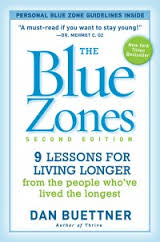
Blue ZonesOne of my favorite TED Talks was given by Dan Buettner, best-selling author of The Blue Zones. The Blue Zones are geographic regions where there are high percentages of active, healthy centenarians.
 
The Blue Zones outlines nine factors that lead to a long, healthy, happy life:

  1. Move Naturally – The world’s longest-lived people don’t lift weights or run marathons. Instead, their environments require long vigorous walks, or activities like farming and gardening.
  2. Purpose – Why do you wake up in the morning? Knowing your sense of purpose is worth up to seven years of extra life expectancy.
  3. Down Shift – Stress leads to chronic inflammation, which is associated with every major age-related disease. The world’s longest-lived people have routines that relieve stress.
  4. 80% Rule – The Okinawans say a mantra before meals as a reminder to stop eating when their stomachs are 80 percent full. They don’t overeat, which is a problem in America.
  5. Plant Slant – Centenarian diets are mostly plant-based. They typically eat meat only five times per month.
  6. Wine @ 5 – Surprisingly, moderate drinkers outlive non-drinkers, especially if they share those drinks with friends.
  7. Belong – Attending faith-based services four times per month – no matter the denomination – adds up to 14 years of life expectancy.
  8. Loved Ones First – Centenarians put their families first. They commit to a life partner, invest in their children, and keep aging parents and grandparents nearby.
  9. Right Tribe – The world’s longest lived people chose or were born into social circles that support healthy behaviors.

For more information, visit The Blue Zones website

Jun 17

Seven Anti-Aging Lifestyle Strategies

HealthyHere are seven lifestyle changes that may help to slow down the aging process:
 
1. Eat healthy fats
Coconut oil, extra virgin olive oil, avocados, wild salmon, nuts and seeds are among the highest quality fats we can consume. Good fats actually optimize metabolism, support positive mood and cognition, and benefit the skin and eyes.
 
2. Eat lean and clean protein
Protein helps build the hormones and neurotransmitters that we need to feel great. It also supports the building of lean muscle (and prevents muscle loss), promotes balanced blood sugar, helps support concentration and a positive mood, and supports healthy weight.
 
3. Stop Eating Sugar
Advanced glycation end products (AGEs) form in the body when sugar reacts with proteins and fats in the body. The more sugar (glucose or fructose) in the body, the more AGEs. An increase of AGEs in the body can damage cells, cause inflammation, and cause advanced aging and chronic degenerative disease. AGEs have been linked to diabetes, Alzheimer’s disease, and heart disease.
 
4. Eat More Dark Green Leafy Vegetables
Dark green vegetables include broccoli, collard greens, spinach, Swiss chard, kale, and various lettuces. The antioxidants in these vegetables help protect the skin, brain, and cells from damage by unstable molecules. They also contain vitamin C, which helps to prevent wrinkles.
 
5. Eat brightly colored fruits and veggies
The brightly colored organic fruits and vegetables contain vitamin C and carotenoids that support eye health and skin health. The fiber in fresh fruits and veggies help us to maintain a healthy weight.
 
6. Avoid Eating Starchy and Processed Carbohydrates
Baked goods (cookies, muffins, cakes), pasta, potatoes, crackers, pretzels, chips can literally fast-forward the aging process. The body quickly turns these foods into sugar. The consumption of starchy carbs is associated with type 2 diabetes, metabolic syndrome, obesity, high blood pressure, cardiovascular disease, and depression.
 
7. Exercise
Embrace high intensity intervals, resistance training, walking, yoga, hiking, gardening, dancing, and swimming. These forms of exercise, increase lean muscle, improve mood, help us maintain a healthy body weight and keeps our brain sharp. Did you know that endurance training, over the long run, can actually fast-forward the aging process?
 
Reference: 7 Anti-Aging Lifestyle Strategies, 9 News, May 24, 2016, by Dr. James Rouse.
 

sidebar

Blog Sidebar

My name is Diana Hale, and I serve families and business owners in Denver, Colorado Springs, and the surrounding metro areas.

2000 S. Colorado Blvd.
Tower One, Suite 2000
Denver, CO 80222
Dir.: (720) 739-1799
Fax.: (888) 552-6580
Diana@HaleEstatePlanning.com

Social Media

TwitterGoogle +Linkedin

2000 S. Colorado Blvd., Tower One, Suite 2000 | Denver, CO 80222
800-686-0168 | 720-739-1799 | 719-623-5822

© 2026 Hale Law, LLC

This website includes general information about estate planning, probate, and business law. These materials are for informational purposes only. They are not intended to be legal advice regarding any particular set of facts or circumstances. You need to contact a lawyer licensed in your jurisdiction for advice regarding your specific legal issues.